Sarah adjusted her new Oakley TrueVisions and slipped between the subway doors as they closed. They pinched her nose, but she knew she’d get used to them like she had her previous pair. Her ongoing chess game with Malcolm blinked, so she activated it and surveyed the board. He’d taken her pawn, but she knew it’d been right to sacrifice. She just didn’t know the next move.
The train car shimmied and rattled as it bent around the curve, but Sarah was focused on the board hovering before her that only she could see. Finally, she decided to be aggressive and put her knight in an attacking position. With her decision made, the program scored her play as a novice move and showed her four other possible maneuvers she could have made. She wasn’t a good chess player now, but she knew if she kept at it, she’d be a Master in half the time it took her father.
Off the train and back at street level, she brought up the free way-finder layer for the best route to the interview. A smattering of advertisements appeared, but so did a bright yellow line leading her to the Centurion Building. Follow the yellow brick road, she thought.
A barrage of messages came flooding through and Sarah started reading them. She’d gotten up early for the interview and all her friends were just waking up. Her mind busy with the replies and following the yellow line, she almost stepped out into traffic when a burly gentlemen in a navy woolen sweater grabbed her arm.
“Thank you,” she mumbled and waited for the light to turn.
Sarah stopped at the coffee shop and reviewed the menu. Her coffee-helper app flooded her screen with information about calories and cost per ounce and fat content and the effect on the environment. The wealth of information made her head swim and so she ordered a double chocolate latte with extra cream. She regretted it as soon as she paid. Her drink was half her calorie count for the day and she wasn’t yet to her weight goal.
Halfway up the elevator in the Centurion Building, Sarah brought up her notes to review for the interview. They led her right in and she sat down. Sarah had prepared all night for the interview with Centurion Capital and she just knew she’d ace the interview. Centurion was a forward-thinking company so they actually wanted you to interview with your AR specs on.
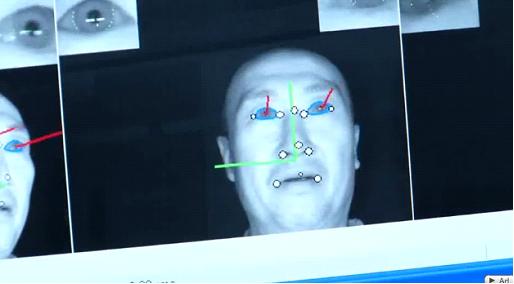
With her notes hanging mid-air to her left and the facial expression reader app overlain her interviewer’s face, she knew she out-gunned them. The interview started well, but Sarah got distracted by each change in his face. Often she would respond to the change in the interviewer, and he would respond to her and she got lost in the emotional feedback loop. The notes helped, some, but she had them in a helter-skelter organization so at times she reacted slowly as she searched the notes and spoke without feeling.
By the end of the interview, she knew she’d blown it. Dejected and with a migraine coming on, Sarah found herself back at the coffee shop ordering the other half of her calorie load. At least tomorrow she had two new interviews to make up for the one she’d blown today.
***************************************************************************************
Augmented reality pundits, myself included, purport that the nascent technology will change our lives. But really, that’s what technology is all about. Even the lowly vacuum cleaner was sold as a way to free the housewife from her oppressive chores.
A better question might be to ask how augmented reality will change our lives, and more importantly, how will it change our brains. The brief snapshot of its effect in the story above was to illustrate the result of a ubiquitous computing environment. But to truly understand, we have to go deeper into the actual brain matter and watch how AR might change it.
1. Learning Optimum Strategies
The brain learns by failure. In the 1970s, Wolfram Schultz a neuroscientist at Cambridge University did experiments on monkeys involving measuring their dopamine levels while getting rewards for behavior. Monkeys were given a shot of juice as a reward for moving a joystick in a particular direction. Once the behavior is established, the dopamine in the monkey’s brains rises before they actually get the juice and after they’ve pulled the joystick in the correct direction, further establishing the behavior. The dopamine is a predictor of success, but if the brain doesn’t actually receive the reward, then it becomes frustrated and reduces the link to the behavior.
This is the essential strategy for learning, or as Neils Bohr once put, “An expert is a man who has made all the mistakes which can be made, in a narrow field.” The brain is constantly trying to reduce the “error-signal” by finding the optimum strategy.
What AR has to offer in the future is a constant computing environment that can help us detect our failures more quickly, so we can reduce that error-signal. World-class game players constantly and ruthlessly evaluate their performance looking for their failures so they can adjust. An on-all-the-time computer that understand your world and is a conduit for your habits can help optimize your performance with the right algorithms.
2. Over Thinking the Pitch
Now imagine a minor league baseball player has read the first item on the list and decided he’s going to use the knowledge to be a better hitter. He has a wiz-kid younger brother who can program like the wind and he makes him a hitting app to use with his conspicuous AR specs. When he steps up to the plate, he’s presented with a ton of angles and information based on the pitchers body language that tells him what kind of pitch to expect. As the arm comes around, lines draw in where the ball is expected to go including a predictive MPH meter hanging over home plate. The hitter calculates where he thinks he needs to swing and starts the follow though.
What happens? I propose that he swings and misses, and on average, his hitting percentage goes down. Why would this be? More information helped my chess girl learn. But in a fluid game where reactions are in milliseconds, you can over think the pitch.
The most famous chokes in sports history came on the last hole of the British Open in 1999 by Jean Van de Velde. His mistake? He started thinking about how he was going to swing and stopped letting it happen. Analytics can help us after the fact to learn from our mistakes, but in the heat of battle, our gut knows best.
3. Don’t AR and Walk
We all know that it’s dangerous to drink and drive. And probably most even knew that it’s dangerous to text and drive (and as this article points out, it’s even more dangerous than drunk driving.)
But what about walking and using AR? We’ll be living in an information rich environment and interfacing with our computers in ways that will tie up our brains. The recent bestseller SuperFreakonomics points out how walking drunk is eight times more likely to cause your own death (of course, you’re also taking other lives into danger when you drunk drive — so don’t do it.) This means that your distracted walking will become a hazard more dangerous than drunk driving.
If AR becomes the norm, will we see laws enacted prohibiting accessing our AR specs while walking? There have been stranger prohibitions.
4. Too Much Information Leads to Poor Decisions
Information is a blessing and a curse. The key to making it work is finding the “right” information. I often teach people struggling with information overload at work to find the “actionable” information and not to get lost on the “vanity” information.
A simple experiment conducted by Paul Andreassen on a group of lowly MIT business students illustrated this point. They broke up the subjects into two groups and asked them to pick stocks to maximize their profits. One was given only the changes in the prices of their stocks and the other group was given access to cable channels and expert analysis. The low information group doubled the cash of the information rich group. The wrong information is more dangerous than no information at all.
Augmented reality proposes to be an information rich environment. So we’d better be careful if we try to drink from the fire hose.
5. Increasing our Emotional Quotient
Reading people is one of the skills within the Emotional Quotient (EQ) set. One of the basics is the ability to understand the emotional state of other people. This makes us more capable of utilizing the right methods for getting what we want.
Paul Ekman pioneered the rules for reading and interpreting the expressions of the face in a five hundred page document called the Facial Action Coding System (FACS.) The purpose of FACS is to tell researchers the inner-mind of their subjects during experiments. Another researcher, John Gottman uses this system to tell if a marriage will last just by watching the couple for five minutes. He has an amazing track record of correct predictions.
But what if we use computer recognition to utilize the FACS? Then we can create live training systems that help us understand what people are thinking. This can lead to better understanding of people and increases our EQ. Or it could become distracting and impare our ability to have a conversation leading to people not wanting to talk to us.
6. More Uptime of Learning
The book Outliers by Malcolm Gladwell talks about the magic number of 10,000 as the hours needed to become an expert. An always-on computing environment with a screen hanging before our eyes can give us more opportunity to hit that number as we continue our work in the blank spaces between other events (meeting surfing will become even worse.)
Combined with the rapid feedback of error-signal learning, we can become experts in the field of our choice in less time than ever. Unless our field is firing arrows into apples from a speeding horse while riding backwards. Then I’m afraid, you’re going to have to do it the old fashioned way.
7. Information Makes You Fat
If I asked you to memorize a seven digit number and then while your mind is tied up trying to do the task, offer you a piece of cake or a bowl of fruit, you’ll be twenty-two percent more likely to choose the cake. The human mind is only capable of holding seven pieces of data at any one moment (from psychologist George Miller’s Essay “The Magical Number Seven, Plus or Minus Two.”)
When the cognitive brain is tied up memorizing the seven digits, our impulse control is reduced. This exists because working memory and rationality both come from the prefrontal cortex. This would also help explain why millions of Worlds of Warcraft players gain so much weight and it’s not just because they’re sitting for hours at a time.
As we glut on a diet rich in information in our augmented world, we want to be careful that we’re not so busy that we glut on our impulses as well.
**********************************************************************************************
Augmented reality is really about information floating before our eyes, always on, always there. Like many things in life, moderation is the key to getting the most out of it. And while this forward look at the dangers and opportunities for our brains assumes that we’ll be wearing glasses and watching the latest Christina Aguilera video while picking our daily stocks and making our grocery list, it doesn’t have to be about augmented reality at all. Information is both a blessing and a curse, and it’s around us all the time, even now. Augmented reality will just make it a bit more hyper-aware.
If you liked the little vignettes of thought about information, you might like the following books that most of this research came from: Blink by Malcolm Gladwell, Outliers by Malcolm Gladwell, SuperFreakonomics by Steven D. Levitt and Stephen J. Dubner, and How We Decide by Jonah Lehrer.
Filed under: Uncategorized | Tagged: augmented reality, brain, Cambridge University, Emotional Intellegence, George Miller, Jonah Lehrer, Malcolm Gladwell, Neils Bohr, neuroscience, Outliers, Psychology, Stephen J. Dubner, Steven D. Levitt, Wolfram Schultz | 7 Comments »






 Games Alfresco