How Will You Protect Your Customer’s Data Exhaust?

Last week on The Future Digital Life, I posted about the Dangers of Computer Vision.  The post garnered a fair amount of interest but it is a question that’s a tad ahead of its time.  We don’t have cameras greedily sucking up information by the bucketfuls right now.

But we do have GPS for our augmented reality apps.

Cue the Imperial March soundtrack and bring out Apple’s turtlenecked front man in role of Darth Jobs.  A recent “bug” was uncovered in iPhone’s software that allowed tracking of the phone user’s location.
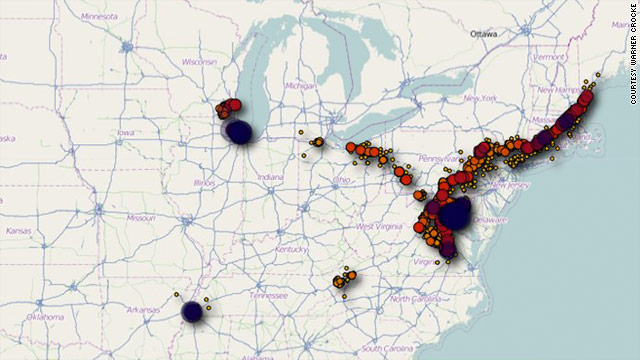
Apple claims the data is not the actual smartphone location:

“The location data that researchers are seeing on the iPhone is not the past or present location of the iPhone, but rather the locations of Wi-Fi hotspots and cell towers surrounding the iPhone’s location, which can be more than one hundred miles away from the iPhone.”

Either way, it’s a perception that a breech of trust has occurred.  Rather than ramble on about the dangers of this data, and since many of the readers of Games Alfresco are software designers, I thought I would pose a question.  One that won’t be that surprising if you read the title of my post.

Sound off, software developers of the rabid interwebs…

How will you protect your customer’s data exhaust?

The Best of the Best in Augmented Reality Compete for Top Industry Award

Industry icons Bruce Sterling, Vernor Vinge, Will Wright and Jaron Lanier to judge “The Auggies” – at the worldʼs largest AR event.

Register Today!

SANTA CLARA, CA (April 26, 2011) – The Augmented Reality industry is getting ready to show off a new round of innovation to the technology, media, and marketing communities.  If you ever wondered about the potential of Augmented reality and wanted to check it out up close, you will be excited to know that “The Auggies” returns to the world’s largest augmented reality event, ARE 2011 at the Santa Clara Convention Center in California. The second annual Auggies competition will take place at the heart of Silicon Valley as the brightest minds in the industry put on a show to impress the industry’s most iconic judges and inspire the audience packed with AR enthusiasts.

The thing I like best about ARE is personally witnessing things that never show up on the Internet. There’s a tension in Augmented Reality, between the global scope of the technology and the local character of the teams that produce it. When you’re in the room with committed, creative people — looking them in the eye, breathing the air they are breathing — that’s what makes it an “event.”

– said Bruce Sterling.

For the Auggies competition, augmented reality teams get 5 minutes each on stage and compete for the coolest live AR demo. The panel of judges provides their unabashed comments, critiques and if they are deemed worthy praise. Winners will be voted by the audience and receive the prestigious “Auggies Award.”

The Auggies is the opportunity for AR developers to unveil their vision of the future, not only in terms of technical progress, but also on how creative you can be with this technology. Winning is truly an important recognition from the AR community and it surely means you’re defying the norm and taking one step further.

– said Ivan Franco of YDreams – the 2010 Auggies winner.

Nominations for live demonstrations at the 2011 Auggies include: Previznet, Georgia Tech, Mobilizy, Whistlebox, Ogmento, Metaio, Vertigore, and Occipital.

The competition is still open for additional nominations until May 10th.

The only way to witness the yearly AR battle for the Auggies and participate in the live audience voting is to register for the ARE 2011 event. Event registration is limited and does sell out.

Weekly Augmented Reality Linkfest

This week in the linkfest – computer vision, Easter bunnies and furniture:

  • Augmented Reality for Smartphones” is a 50 pages-long report that analyzes many popular AR platforms in order to give developers better perspective on what’s available in the market today.
  • Computer vision (1): Thomas K. Carpenter warns us against its dangers.
  • Computer vision (2): Raimo van der Klein gives an excellent talk on why computer vision, like biological vision at the time, will start an evolutionary arms race – Birth of the Digital Eye.
  • Computer vision (3): IQ Engines is a cool startup, offering “vision as a service”. I’ve tried their mobile application, and it is amazing at recognizing objects – but also usually slow, because it is still partially based on humans behind the scenes.
  • Fraunhofer presents an eye-tracking microdisplay that delivers Terminator vision (via @Ben_Thomas_Ech).
  • Oh noes! Giant Easter bunnies invade the Earth!
  • Finally, if you ever find yourself confused by IKEA’s instructions, there will be an app for that (maybe).
This week’s video was featured on Bruce Sterling’s Beyond the Beyond, but if you missed it, here’s your opportunity. It’s in French, and depicts a modern fairy tale, made possible by augmented reality. Luckily you don’t need to know French to follow the story, and I find it only adding to the video’s allure. (However, I’ll be thankful if you can translate the old guy at the end of the video in the comments).
Happy Easter/Passover!

Google Map Maker Will Help Annotate AR World

Google is finally allowing us to edit and add to the map of the United States.  Google Map Maker accepts user contributions and map edits which will, after being checked by a small verification group, be added to the map.  This information can now be seen in Google Street View along with searchable content.  I added a point to my local map and it was added within minutes.

Now local areas can be filled in with detail that will help users manage their every day world.  You could add a shortcut through a campus or a favorite hot dog vendor location that doesn’t show up on the normal map.  It’s possible this information could be used for an AR world.

This is huge news for future AR browsers (or current ones if they can draw from this data.)  Augmented reality is essentially information overlain the life sized map of our world.  Maps are just less detailed versions of our world and Google Map Maker helps transition between the two.

Weekly Augmented Reality Linkfest

It’s time again for the weekly linkfest, a collection of augmented reality news stories that I didn’t find the time to blog about during the past week:

This week’s video comes to us from Nokia Research, showing their indoor navigation solution. Coming from Nokia Research, one of the first bodies to look into mobile AR, this should be considered as no more than a teaser. It’s very cool and alluring with its 30cm accuracy, and its “where I put my keys” functionality, but not likely to be adopted anytime soon. Five years from now, Apple/Google will probably come with inferior solution which will be hugely successful. You can read more about the technology on GSM Arena.

Have a great week!

Interactive Billboard with Feelings

My favorite part of the billboard is that it’s made for when you’re stuck in traffic.  I’m thinking the billboard is going to be mostly sad.

Partnering with Tronic the billboard sits near the entrance to the Holland Tunnel and reads, ‘Today I’m Feeling _____’. Using a the GoldRun GPS augmented reality app, passerbys or drivers stuck in traffic can see if the billboard is happy or sad or, whether it feels like dancing or cheering on its favorite team.

Because the billboard is GPS tagged, a number of images can appear at the same site making it more interactive than typical augmented reality applications, essentially, taking a traditional billboard and making it digital. For example, users can change the feelings themselves using large-scale emoticons, and then post them to Facebook or Twitter.

This billboard is part of ADstruc’s ‘Billboards for Everyone’ campaign that partners with artists and designers to help promote creativity and innovation in the outdoor space.

ADstruc Interactive Billboard from TronicStudio on Vimeo.

Traveller AR – iPhone RPG

Traveller AR is an upcoming iPhone AR RPG (whew, that’s a mouthful) that has released a beta and a brief video.  The game is based on an old RPG, basically D&D in the stars.

Traveller-AR uses iPhone’s Augmented Reality to:

  • See a virtual 3D world over-layed on the real world through the window of your iPhone.
  • Allow you to move your phone around in real-space, and explore virtual space as though looking through a window to unreality.
  • Place you in the virtual world, near your actual GPS position.
  • Provide travel bonuses and trading bonuses based on your actual GPS position.
  • Discover and interact with other real players near your actual GPS position


First Eggs Tracking Application Will Augment Your Easter

With Easter just around the corner, we are undoubtedly facing a round of festive augmented reality applications. While last year saw the creation of GPS based applications such as “AR Easter Egg Hunt“, this year brings computer-vision based applications, and leading the pack is Irregular Apps’ “Talking Augmented Easter Egg“.

Using what seems to be a unique algorithm to identify and track eggs, Talking Augmented Easter Egg enables iPhone and iPad users to virtually decorate plain white eggs, poke them until they (again, virtually) break and even talk to them. People may think you are crazy, pulling an egg from the refrigerator, looking at it through your iPhone and then starting to talk to it, so maybe you should let your kids play with this one.

When I tested the application on my iPhone 3GS, it surprisingly worked well. The tracking was a bit jumpy (as you might expect), but it did identify my “test egg”, even with a few decoys around (like a white charger). True, it’s a gimmick, that will lose its attraction in a few weeks (unless you are an angry bird, using the app to track your stolen eggs), but it’s probably make your kids quite happy for those few days.

More details can be found on Irregular Apps’ website.

GoldRun Raises $1.0M to Expand Reach of Mobile AR

* A year ago we were scanning the heavens waiting for VC manna.  Now it seems we have a blizzard.

NEW YORK NY April 11- GoldRun, a leading mobile augmented reality platform, has raised $1.1 million in angel funding. Participants in the round include Ed Mathias (The Carlyle Group), financier Jon Ledecky, Jeremy Zimmer (Founding Partner of United Talent Agency), Jim Hauslein (Former Chairman and CEO of Sunglass Hut), and Mark Ein (CEO of Venturehouse Group).

New York-based GoldRun will use the funding to develop a series of new user and client side feature sets that will greatly expand the range of programming and AR interactions on their platform. The funds will also support increased sales activities and accelerate the deployment of services across the U.S. and international markets. 2011 will see the introduction of GoldRun-hosted gaming, v-commerce and user generated content.

Comprised of a mobile app coupled with a dynamic content delivery system, GoldRun uses augmented reality to bring the visually-driven, content rich experiences of the web into the offline world. By GPS-linking 2D and 3D virtual goods to physical locations such as retail stores, airports and events, GoldRun enables users to locate, interact with and take pictures alongside virtual objects, and earn immediate, relevant real world rewards for every one of these interactions.

GoldRun launched November 1st, 2010 and has since worked with H&M, Airwalk, Young & Rubicam, Esquire, Barnes & Noble, Marc Ecko, Universal Pictures, A&E Network, Sorel, Interscope Records and Oklahoma University among others.

“GoldRun allows for a new form of communication where our digital and physical lives meet,” says founder/CEO Vivian Rosenthal. “We’ve already evolved beyond check-ins, making them visually-driven and image-based. With the integration of location and context, along with photo taking and sharing, we’ve set ourselves apart by creating a new virtual goods economy mapped onto the real world.”

As part of the financing, Ed Mathias and Jeremy Zimmer will join GoldRun’s board of directors; Greg Golkin and Evan Morgan will serve as board observers.

Help Understand Mobile AR Usage, Win 50 Euros

If you are a user of one the mobile AR applications, such as Layar, Junaio, Wikitude, Google Goggles (or any of the many others), and would like to help the (academic) research of augmented reality, boy do Markus Salo and Thomas Olsson have an offer for you.

Noticings Layar

The two researchers from Finland ask you to think about your most satisfying and unsatisfying experiences using AR application, and for your view on the usefulness of such applications and take the following survey. I must say that imho, mobile AR has not yet created a really satisfying moment, and the enjoyable moments it did create, didn’t last for long (though, some of the creative things people do with mobile AR are really mind boggling).

Best of all, by participating in this survey, you enter a raffle to win one of 10 Amazon-vouchers, 50 euros of worth each. Considering that AR is still a niche, you have pretty good chances to win it. Even better, Salo has promised to share the results, so we’ll can all learn from this survey.

take the survey