This tradition cannot be stopped, here’s another weekly linkfest:
Pocket Lint posted many articles about AR celebrating “AR Week“, and I must admit that I haven’t read any one of those yet for a lack of time. But they do seem interesting though!
Sony follows Nintendo’s lead, and demos augmented reality on the next gen PSP. Is this evidence of AR becoming a must have feature for mobile games platforms?
Stealth AR startup Bubbli to make “the virtual and the real become indistinguishable”, and they are looking for workers. If only I was living in California …
This week’s video comes from Robert Scoble’s tour in SRI International, showing a handbag buying application, using Kinect to make it seem like a real handbag is actually dangling from the lady’s arm. See more videos, including one aboud head mounted display based AR gaming, in this post, titled “A Look At How SRI Is Augmenting The Human Condition“:
Only a few weeks ago, we reported on Virtual Master Reel, an augmented reality game whose aim was catching virtual fish with an augmented fishing reel. Seems that augmented reality fishing games are trending right now, because Nintendo got one for its Nintendo 3ds platform. Video doesn’t do it justice, because the whole 3d display thingy is lost, but it still looks good. You can read more about the planned AR games for 3ds on Wired.
Here is another example of art activism where augmented reality is used to convey a message. Building upon Layar, artists Mark Skwarek and John Craig Freemand created was is probably the first virtual war memorial, commemorating each of the 52,036 deaths, both Iraqis and Allies, in the last gulf war.
The artists translated the place of death in Iraq to a location in the US and placed there a virtual casket, either “American” or “Middle eastern” in design. The result is disturbing:
A bit of a busy week, here are just some of the augmented reality stories that happened in the past seven days:
Where can you find Metaio’s Peter Meier and Layar’s Maarten Lens-FitzGerald on the same panel? At the DLD conference. Video well worth worth watching if only for seeing Lens-FitzGerald’s face when Meier declares Junaio as the most advanced AR mobile application.
Pantomation is the late 70’s edition of Kinect and augmented reality. Makes me wonder what the people of 2040 will think about our current technology (via @String)
Sometimes, you don’t need enticing narrative to create a touching AR application. “Jack in the box” by the Spanish company Sensaa is an evidence to that. Just open a box, and an augmented surprise will pop out of it. Simple, but wonderful:
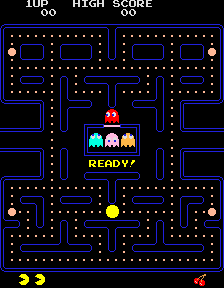
1980, the Japanese Namco corporation develops Pac-Man, making arcade history
2004, researchers from National University of Singapore’s Mixed Reality Lab, led by Adrian Cheok, create Human Pacman, a first person version of the classic game, that lets you play the classic game with an augmented reality twist. This twist also means that you have to carry a laptop on your back and wear a HMD on your head.
2011, now you can play a first person version of Pac-Man by just loading Layar on your iPhone, developed by GamePS
I hate it when I’m scheduling a post just to find out that someone else (this time Augmented Planet) publish a post about it just a day before my goes up. Luckily ARTags is important enough to deserve two posts within 24 hours.
Coming to us from France, ARTags is an AR drawing application, that apparently makes it very easy to draw nice looking pictures on your mobile phone and add them to your current location. Though it’s quite new, already more than 1500 pictures were drawn using this app all across the world.
But that doesn’t make it special. What makes ARTags special is the fact that it’s a cross platform app. That is, the pictures are visible using Wikitude, Layar and Junaio (though I had a bit of a problem finding the right channel on Wikitude). Instead of creating a new browser application, or integrating within only one of the above three, the folks behind ARTags decided to have a presence in all of them. That’s absolutely the right decision, at least at this stage. I certainly hope that other app developers will follow.
Now, if only someone invented an app to make its user better artists.
We have covered quite a few art projects using augmented reality as their canvas, but nothing of the scale of Biggâr. Created by Sander Veenhof, can best be described as a virtual sculpture composed of more than 7 billion blocks encompassing the whole world.
Using Layar, you can not only view Biggâr but also interact with its blocks. A single tap on your phone is all it takes to change the color of all 7 billion blocks (sadly only three colors are available to choose from). I failed to experience a live color change, but it should be quite a trip. More info here.
I’m going to London next week (where I’ll might be tempted to get a Kinect), so this is probably the last linkfest till mid-December. I’ll try to keep my twitter account updated with interesting links while I’m away. Anyway, here’s this week’s linkfest:
I never met the guys from Layar in person, but I think I would really enjoy a conversation with any one of the founders. I think the secret of their success is not luck or being first to market (which they weren’t), but being both highly intelligent, yet very nice folks. Here’s a short interview with Claire Boonstra on Layar’s past and future. Winning quote – Augmented reality is the next mass medium, the first unboxed medium:
No doubt about it, this week was under the sign of Kinect. Dozens of amateur programers used the OpenKinect drivers to create wonderful, many times AR related, demos. These and more in this week’s linkfest:
Kinect hacking is nice, but the biggest news of the week is coming from Layar which raised another $14M. Follow the link to read a letter from Layar’s CEO Raimo van der Klein, on what it means and what’s next for Layar.
And here’s yet another video showing the power of Kinect. Created by Theo Watson in a single day, this is a very impressive skeleton tracker. How long will we have to wait till someone finds a way to combile AR glasses with Kinect?
Here are some of the stories you might have missed this passing week from around the AR-sphere:
Total Immersion uploaded videos of the two keynotes given in their AR Immersion conference. I find the Adobe one is quite boring, but TI’s CEO, Bruno Uzzan gives a very good talk on the past, present and future of AR.
This week’s video is short and sweet, showing how a guitar lesson can be augmented. We have seen implementations of similar ideas before, but as far as I recall, it’s the first with marker-less tracking of the guitar itself. Of course, it’s nothing but a demo, and I’ll be surprised if it tracks any guitar but the one in the video. It’s cool, nonetheless:




 Games Alfresco