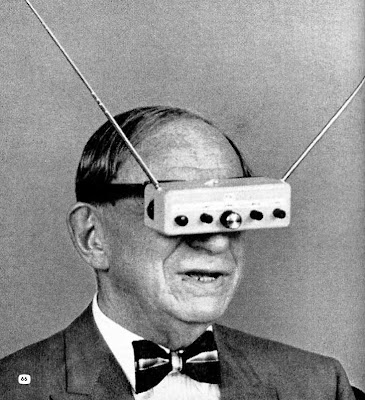
Get High on Reality

It’s not what you’re thinking…

In my pursuit of the ultimate augmented reality experience I have stumbled upon many slogans, some good:

Then, I hit one slogan I was not expecting.

But before I tell you about it: Did you know Elvis once reached out to Nixon in order to help him combat communism, drugs, hippies and…The Beatles?


Presley was going to work on a new vigilant rock musical and came up with the slogan: Get high on life.

I didn’t believe it as well, until I saw it on the History channel.

First I was shocked.

Then I had this scary thought: what if we slightly modify it to inspire the augmented reality movement?

Young and old spend countless hours in front of the screen, comforting their brains with games’  reward mechanism.

From a brain function perspective – it is not fundamentally different from the way the brain works to satisfy an addiction…

***We interrupt this post to bring you breaking news  from Pew Internet***

Findings:

  • 53% of US citizens over 18 play video games, with 21% playing every day or almost every day.
  • 81% of the 18-29 demographic play
  • as do 23% aged 65+ (wow)
  • 76% of students play video games

***Back to our post***

So, there you have it: instead of getting high in virtual worlds – we say go out and play (with AR) and Get high on Reality.

Did I just said that!?


9 Movies that Will Inspire Your Next Augmented Reality Experience

Movies have used special visual effects to augment reality in cinema since George Melies did it first in 1899.

George was a French magician who took advantage of an emerging new technology – moving images – to invent a totally new experience in theaters.

Today we are on the verge of experiencing “special effects” in our field of view anywhere we go (see demos) thanks to emerging augmented reality technologies.

Walking backwards from 1907 to 2008, here are 9 movies to inspire your next augmented reality experience.

1) 1907 – George Melies – the Hilarious Poster

Characters in a poster come to life in this incredible movie from the inventor of special effects.

2) 1988 – John Carpenter‘s They Live!

This underrated sci-fi movie introduced bad acting and a classic AR story: a homeless drifter stumbles upon a pair of sunglasses through which you can see the world for what it really is. He can uncover the communist aliens that control the world.

3) 1988 – Who Framed Roger Rabbit

The first movie to mix the real and the loony. Bob Hoskins has never been seen drooling like that, not even in Super Mario Bros.

4) 1996 – Space Jam

A second attempt to mix the real and the loony, this time with a stretching Michael Jordan.

5) 2002 – Minority Report

User interface for navigating vast amounts of data that span time and places.

6) 2003 – Terminator 3

Get real time data about people you meet. A very useful application when you’re looking to borrow cloths that fit. Here is the Girl’s Night version from the third installment.

7) 2003 – Pirates of the Caribbean – the Curse of the Black Pearl

Watch minute 0:30 to 0:50 for a spooky AR effect I’d like to try someday.

If the movie doesn’t run click here.

8) 2007 – MUTO by Blu

This one is real reality and took tremendous effort. An incredible inspiration to overlay the world with art (which could be made easier with AR).

9) 2008 – Iron Man

Augmented Reality for (very) rapid prototyping, now for bringing peace to earth.

Vodpod videos no longer available.

Arthur C. Clark famously said “any sufficiently advanced technology is indistinguishable from magic.” which brings us back to the magic of George Melies.

Which movies inspire you to create new augmented reality experiences?

*** Update: Reader contributions ***

10) 2006 Stranger than Fiction

From Robert Rice: How an augmented life of a person obsessed with numbers might look like

11) Denno Coil

From Jonas Hielscher: Animated, but visionary take on a world with pervasive augmented reality

12) Fight Club

My son reminded me of this “virtual furnishing your apartment” scene in this brilliant anti consumerism movie

The Making of ARf: Me, My Dog and i-Phone

Blair MacIntyre sent me a nice proof of concept of an augmented reality virtual pet running on an iPhone.

So I thought, why not write about “the making of ARf”?

Shot a couple of questions to Blair and he conveniently turned it into a well structured interview. Thanks Blair!

Here it is for your edutainment.

games alfresco: Hey Blair, I’d like to write about ARf in my blog.

Blair: Great! :)

games alfresco: Is there anything beyond the video that I could share?

Blair: We (my student Kimberly Spreen, really) did this relatively quickly.  She figured out how to get video [on an iphone], and we’d been thinking about doing a virtual pet game for quite a while, so we decided to implement some of the ideas to test out the iPhone.

games alfresco: Could you share a description of the current features?

Blair: Right now, you can interact via the touch screen, and by moving the markers.  Kim did a nice little implementation of multi-marker tracking where you can just add new markers as you feel like and don’t need to preconfigure the multi-marker layout.  You can interact with the dog by touching it (touch its nose and it jumps up to lick, its tail and it chases it, rub its back and it rolls over to let you rub its tummy) or by touching the ground to send it somewhere.  If it gets near its water it drinks, near the other dog it plays, or near a smudge (that you put on the ground by rubbing the ground) it sniffs it (alas, the smudge looks like a little “pile”, which works, but wasn’t the intent).

games alfresco: Plans for a full game?

Blair: This is a project we’ve been thinking about for a few years, going back to our “Dart the Dog” project that we did in Director.  The goal is to explore what it means to let everyone have a virtual pet they can take with them, and interact with through different interfaces (desktop, handheld, handheld AR, etc).  Most importantly, we want the location (bedroom, living room, work, bus, bar, etc) and activity (sound level, light levels, etc) and presence of other pets to impact how the pet develops.

To handle the development, we are talking to some folks at an AI company, who are creating an engine for doing creature AI based on reinforcement learning.  They hope to have something we can use next year.  If we can get that, we will be able to really have pets that grown, change, evolve, etc.

A few company’s who are funding us are interested in this, so I hope we can devote some energy to it next year.  We’ll probably target a few platforms, but obviously the iPhone has a lot of appeal.  From a research perspective, I’m interested in it because there is the potential to release a research game and (with permission of the people who download it, of course), collect a lot of usage data.  Ironically, since the create AI engine is server based, I don’t know if we could handle a big success and provide the AI service to everyone who gets the game, but I’ll worry about that it we ever get there.

games alfresco: Can you share more details about the software? Is it a Jailbroken iPhone?

Blair: Official iPhone SDK, unhacked phones.  I have no interest in working with jailbroken phones;  the appeal of the iPhone is the potential for mass distribution to support broad evaluation and feedback.

Obviously, we have hacked the API to get at the camera, so we can’t release this until Apple creates an official API.

We are using StbTracker for tracking.  The rest of the software was written by us.

games alfresco: Cool. Thanks for showing us “under the hood” of ARf.

For a doggie game, the name ARf works nicely in English.

It could get weird when translated into:

  • Spanish – jau, jau
  • Afrikaansblaf
  • Albanian – ham, ham
  • Arabic – how how
  • Armenian – haf, haf
  • Basque –  zaunk-zaunk
  • Bulgarian –  jaff, jaff
  • Catalan – bau, bau
  • Chinese, Cantonesewow, wow
  • Chinese, Mandarinwang, wang
  • Croatian – vau, vau
  • Danish – vov, vov
  • Dutch – waf, waf;
  • Esperantoboj, boj
  • French – ouaf, ouaf
  • German – wuff, wuff;
  • Greek – ghav, ghav
  • Hebrew – hav, hav
  • Hindibho, bho
  • Icelandic – voff, voff
  • Indonesian – guk, guk
  • Irish – amh-amh
  • Japanese – wan, wan
  • Korean – mung mung
  • Latvian – vau, vau
  • Persian – vogh, vogh
  • Portuguese – béu-béu
  • Russian – gav, gav
  • Serbian – av, av
  • Slovenianhov, hov
  • Thai – hoang, hoang

How to Liberate Children from the Screen and Avoid Health Hazards

Black Friday has gone by and cyber Monday came along with a flood of scary headlines:

“Report Ties Children’s Use of Media to Their Health”

“TV, Internet Causing Kids Harm: Report

“Too Much Games Harm Health Of Kids”

“The National Institutes of Health and a nonprofit advocacy group, Common Sense Media, have another reason for President-elect Barack Obama to keep urging parents to “turn off the TV.”

Wow.

It took a “first report of its kind” – a review of 173 studies about the effects of media consumption on children – to undo tremendous efforts over the last few years to educate parents and policy makers about the benefits of video games (and internet and modern TV).

Books such as “Everything bad is good for you” and “What Video Games Have to Teach Us About Learning and Literacy” have argued successfully that these pop culture phenomena may prepare kids for the 21 first century better than other methods (cough*schools*cough).

So what’s up with this new report? Can 173 studies be totally wrong?

Well, if you look closely at the results of the report – its key finding is about the hazards of immobility: the couch potato syndrome.

As one reporter jokes: “Basically, these researchers found if you sit on the couch all day, moving little but your thumbs, you won’t get the proper amount of exercise. I ask you: Did it really take a three M.D.s to figure this out?”

Joking aside, is there anything we can we do about it?

Even the most charming kid-friendly president in modern history won’t be able to convince kids to give up their favorite pastime.

That would be as pathetic as Don Quixote fighting with wind-mills.

So how are we going to liberate children from the screen without losing them?

My answer is simple: give them reality experiences.

Let them rediscover the fun in playing and learning in the real world. By augmenting the world with what captivates kids in video games:

  • the cognitive challenge
  • the interactivity
  • the participatory
  • and the social activity

Steve Johnson explains in “Everything bad…”:

“video games…tap into the brain’s natural reward circuitry…to get kids to learn without realizing they’re learning…”

The technology to enable these new kind of reality games has been around for sometime. The techies call it augmented reality. For the rest of us – it’s just a new way to experience reality, to experience the world.

Every revolution needs a spark to light up. Sparks are mostly based on fear or hope.

The NIH report may have provided the spark for the augmented reality revolution, spurring a combination of both fear and hope for a better world.

A Formidable Mobile Augmented Reality Device? Meet the HTC Touch HD

The new contender to become the mobile augmented reality device of choice is here: meet the HTC Touch HD.

htc-touch-hd-combo

PC World (Taiwan) hands on experience is pretty favorable.

With a far better screen (800×480 compared with iPhone’s 480×320) and a higher rez camera (5MP compared with iPhones 2MP) and its ability to record video (unlike the iPhone’s), it looks very promising.

The only big caveat is the high price tag ($776). It’s now available in Taiwan but poised to hit the EU and US by year end.

It will not have the screen size and the power of a MID – but it fits in a pocket, which is a plus for most of us.

As a result, the HTC Touch HD takes the place of the elusive Meizu M8 (still not out) on my top 5 mobile Devices for high-end AR.

Here is the updated round up.

ar-device-comparison3

Which one do you like best?

How to Get the Next Generation Hooked on Augmented Reality – Today: Part II

In my previous post “How to Get the Next Generation Hooked on Augmented Reality – Today” we explored the value of mobile educational games.

Most of these games were built for PDAs relying on a GPS, but did not include real time visuals of the real world (AR Tracking).

These PDAs are now obsolete.

In order to make it appealing for Kids, we’ll have to put in their hands something more trendy; iPhone, G1, Nokia N85, or a Mobile Internet Device (MID) come to mind.

But here’s the rub: will you give your toddler your precious smartphone? Your iPhone (God forbid) ?

What if electronics manufacturers raise to the occasion and create dedicated mobile devices for education?

Here are the Mobile Learning Devices already in progress:

One remarkable and noble project already in flight is project Inkwell.

The project’s ambitious goal is to create technology standards for the K-12 industry including defining the specifications for an Inkwell learning device. The design is by IDEO Spark.

It does not have a camera yet. But once mobile learning games break free – I am sure Inkwell will update its specs to include a camera.

Two other companies take a more commercially oriented approach (read: practical) introducing education oriented mobile devices (not yet AR enabled) such as 
VTech’s Create-A-Story

or LeapFrog’s Leapster and Didj.

These are less expensive devices that target a smaller niche.

Will these dedicated mobile learning devices be able to take a bite from the 800 pound gorillas in mobile gaming: Nintendo DS and Sony PSP ?

Will these devices drive the next generation’s Augmented Learning experience?

In my post about the new Nintendo DSi, I highlight the innovation and track record that has characterized Nintendo over the years. They will certainly fight the recent attempts in mobile learning devices with all their might.

Or will the iPhones and iClones of the world, with their massive adoption and cool factor, rule the mobile learning market after all?

What do you think?

How to Get the Next Generation Hooked on Augmented Reality – Today

Our belief:

…in 10-15 years everyone will use Augmented Reality to experience the world in a more meaningful way.

Our collective mission:

…nurture a healthy industry that will drive the adoption sooner than later.

So where do we start?

…by educating the youngest “digital natives”.

That generation is ripe and eager to try new experiences that speak their language. And that same generation will carry the AR movement to its glory.

The challenge is how to give them something they like, and at the same time offer value to those who hold the buying power  – their parents, guardians, or teachers.

Tech savvy parents and teachers tend to recognize the value of PCs and video games in educating their kids – but they hate the isolation resulting in too many hours in front of the screen.

Eric Klopfer argues in his excellent book, Augmented Learning, that we should give them mobile learning games:

These games use social dynamics and real world contexts to enhance game play…and can create compelling educational and engaging environments for learners…help develop 21 century skills…tackle complex problems…and acquire information in just-in-time fashion”

Eric doesn’t stop at arguing, he actually does what he preaches. Together with colleagues at MIT Teacher education program & the Education Arcade and in collaboration with Madison-Wisconsin and Harvard, they developed multiple mobile games (see below) – and experimented and improved them – with kids.

And they’re not alone. Researchers around the world have studied this huge opportunity and wrote about it extensively.

Future Lab in the UK is passionate about transforming the way people learn, and develop new approaches to learning for the 21st century (see games below).

Mark Billinghurst, an AR god from New Zealand’s HIT Lab, published this guide about Augmented Reality in Education.

Mike Adams ranted in 2004 about the prospects and dangers of augmented reality games in his passionate  The Top Ten Technologies: #3 Augmented Reality

Cathy Cavanaugh wrote the essay  “Augmented Reality Gaming in Education for Engaged Learning”  as the fifth chapter of a massive hand book dubbed Effective Electronic Gaming in Education. (You can get it for $695.00 at Information Science Reference.)

Cavanaugh explores a (surprisingly large) number of educational games developed in the last 4 years:

Most were designed to teach concepts in scientific systems, and the remaining AR games focus on the difficult-to-master, ill- defined domains of communication, managing data collected in the field, problem solving, and understanding cultural and historic foundations of a region.

Based on that list, here is an (alphabetical) culmination of mobile educational games in recent history:

Big Fish Little Fish (MIT)

Concepts including predator-prey dynamics, over fishing, biodiversity, evolution for school-age children.

Groups of students use handheld devices while physically interacting with each other to simulate fish feeding behavior.

Charles River City (MIT)

Outdoor GPS-based Augmented Reality game for teenagers. Players team up as experts including scientists, public health experts, and environmental specialists to analyze and solve an outbreak of illness coinciding with a major event in the Boston Metro Area.

Create-a-Scape (Future Lab)

Mediascapes are a powerful way of engaging with the world around us. Using PDAs they offer new opportunities to explore and interact with the landscape in exciting and varied ways.

Eduventure Middle Rhine (Institute for Knowledge Media)

Learning the cultural history of the Middle Rhine Valley for adults. Learners alternate between problem solving using video of the castle setting and problem exploration using mobile devices in the real castle.

Environmental Detectives (MIT)

Collaborative understanding of scientific and social aspects of threats to the environment and public health for adults. Participants role-play as teams of scientists investigating contaminated water using networked handheld devices in a field setting.

Epidemic Menace (Fraunhofer Institute)

Collaborative problem solving and experiences with learning arts for adults. Teams assume the roles of medical experts to battle a threatening virus using gaming and communication devices in a room and outdoors.

HandLeR (U. of Birmingham)

Support for field-based learning of children ages 9-11. Groups of children respond to scenarios in the field using a portable data collection and communication device.

Live Long and Prosper (MIT)

Concepts including genetics and experimental design for school-age children. Groups of students use handheld devices while physically interacting with each other to simulate the genetic actions of reproduction.

Mobi Mission (Future Lab)

Communication and reflection activities for teenagers.

Groups of students write verbal missions and respond to the missions of others using cell phones.

Mystery @ the Museum (MIT)

Collaborative thinking skills for adults and youngsters. Teams consisting of a Biologist, a Technologist and a Detective must work together to solve a crime at the Museum of Science.

Newtoon (Future Lab)

Physics principles for adolescents. Students use mobile phones and Web sites to play, create, and share games that demonstrate physics principles.

Outbreak @ MIT (MIT)

Experience with the complexities of responding to an avian flu outbreak, for young adults.

Players are brought in to investigate a potential epidemic on campus with hand-held networked Pocket PCs.

Savannah (Future Lab)

The science of living things interacting within an ecosystem, for ages 11-12. Children, acting as lions, navigate the savannah using mobile handheld devices.

Sugar and Spice (MIT)

Concepts including population economics and mathematics for school-age children. Groups of students use handheld devices while physically interacting with each other to simulate interactions between populations and resources

Virus (MIT)

Concepts including epidemics, scientific method, population growth for school-age children. Groups of students use handheld devices while physically interacting with each other to simulate the spread of disease

So what’s next?

These old games have built-in educational value, they strive to be more fun than traditional classroom lessons, and most importantly – they achieve it while detaching children from the screen.

However, none of these games has really made it to the mass market.

In order to break into the mainstream, games will have to be

  • more visual (see what you mean),
  • more intuitive (touchscreen and accelerometers – drop the Pocket PC look & feel),
  • more ubiquitous (play anywhere, anytime),
  • and they will have to run on devices that look more like an iPhone than a Newton.

Devices for education is in fact the main topic for the second part of this post.

Stay tuned. Or better yet – tell us what you think.

10 TV Commercials That Will Inspire Your Next Augmented Reality Experience

Hours in front of the tube during election season offer some gratifying moments.

TV commercials is not one of them.

But once in a blue moon (pun intended), TV commercials appear as a blessing in disguise: if you open your mind, they will inspire your next augmented reality experience.

There is no cutting-edge technology in these videos.

There is something we consumers consider more precious: visual visions that will freshen up our reality.

To illuminate my argument, here is the countdown of the 10 best TV commercials for AR inspiration.

10. Disney commercial: “What Will You Celebrate”

Take any mundane situation such as the class room in this unpretentious Disney Parks commercial – and lighten it up with fireworks, literally. (Just make sure to wear your AR goggles)

9. Dassault Systemes – See What You Mean

These two commercials from Dassault, the visionary company for collaborative design, literally demonstrate the look and feel of an augmented reality design experience.

8. Sony Walkman

Noisy art work on your clothes, fluffy wings, and puffy speech bubbles on your walls; you’ll feel that cool with Sony Walkman. (Can you handle that much 70s on your retina?)

7. Nice+Smooth

How about this creepy face recognition application?

6. Mercedes C class

Now, you can see the history of me over the years

5. HP

Augmented reality puts it all in your palm

Kzero collected the entire celebrity series featuring Seinfeld, Jay Z and many more.

4. Dodge Caliber – Too tough

A fairy redecorates the city to look like in her dreams

3. KoreaLife

Augment everything in your life! Live the awesome [Korean] life.

2. British Airways

Terminal 5, Heathrow airport, London is swarming with fish. It may be all 3D animation – but it inspires an amazing AR vision.

1. Sprint Lights

Garbage trucks and school busses come to life. So simple, so inspiring.

and…Nascar cars fighting like monsters (why not any car)

TV commercials creators work hard to beautify reality on TV. They’re armed with nothing but their creative lenses. Should you have such lenses, what would you do with it?

How would you beautify your reality?

***Update***New TV Commercials***

11. Zappos

12. Playstation 3 – Entertainment Unleashed

13. Coca Cola Avatar

14. Hulu Superbowl

Watch  second 33 for a cool xray


Will The New Blackberry Storm Through the Augmented Reality World?

In our quest for a better augmented reality experience we keep evaluating new devices that could deliver a superior AR experience.

The new kid on the block that is attempting to take on the iPhone is Blackberry’s Storm.

It will be on sale starting tomorrow. Here is a collection of roundups.

Should it make the top 5 best AR device list?

To achieve that feat it first has to beat the iPhone. Its haptic capability (pressing a button on the touch screen feels like pressing a real button) won’t do it alone.

Well, the Storm has a better camera (3.2 MP vs. 2MP), a somewhat better screen (especially in sun light), and it records video. One could also expect a longer battery time.

On the down side: the user experience and the OS is reportedly not up to snuff with the iPhone (freezes, awkward user interface at times). Plus it’s missing WIFI support (what gives?), and it’s heavier (by 17%).

The verdict?

The Storm will have to prove itself in the market with adoption among users and developers before making the top 5 AR device list.

Can The New Nintendo DSi Augment Your Reality?

The Nintendo DSi, now with camera, went on sale in Japan on November 1st; next year in the rest of the world.

We were excited when it was announced in September, and thought it could energize the augmented reality games scene. So, here it is, not just with one camera – but two!

Eurogames shares their hands on experience with the newcomer. If you have a fetish for unboxing new products, get your fix with 1Up.

Aaah, but here’s the rub: the cameras boast a mere 0.3 MP each…

Nintendo’s strategy of taking advantage of inexpensive technology and creating new and compelling game experiences has been wildly successful in the past with the DS and the Wii.

Will developers’ ingenuity be able to beat the DSi constraints (cpu power, resolution) and make it play cool AR games?

Still remains to be seen. Until then, take a look at this basic augmented reality software loaded on the DSi:

  • change the color of your shirt – virtually – with the touch of a stylus
  • face recognition that makes you look happy, angry or sad,
  • or if you are more into felines, why not grow cat-ears-and-whiskers?